
By Lucas Cortes
With the World Cup coming up, a lot more people you know around you might watch a soccer game (or football, as the rest of the world calls it) and understand it perfectly. And you may be sitting there listening to them talk about “Oh, Haaland is such a good poacher” or “He’s such a good CDM,” wondering what all that means and if it’s even really English.
Well, it is. And what they’re talking about makes complete sense if you just give yourself the time to understand it. There are three main things to understand: formations, player roles, and tactics. Once you understand those three core subjects, not only can you rant to your friends about how much ball knowledge you have, but you’ll actually enjoy the game much more!
The first thing to understand is that football is more complicated than just putting the ball in the net. While yes, that is the premise of the game, not every player is responsible for scoring goals. The whole team works together as a well-oiled machine to put the ball in the net.
The Sheridan Sun talked to James Merriman (Canadian soccer coach and former player who currently serves as the head coach of Pacific FC in the Canadian Premier League) to go into further depth about some of the topics.
Formations
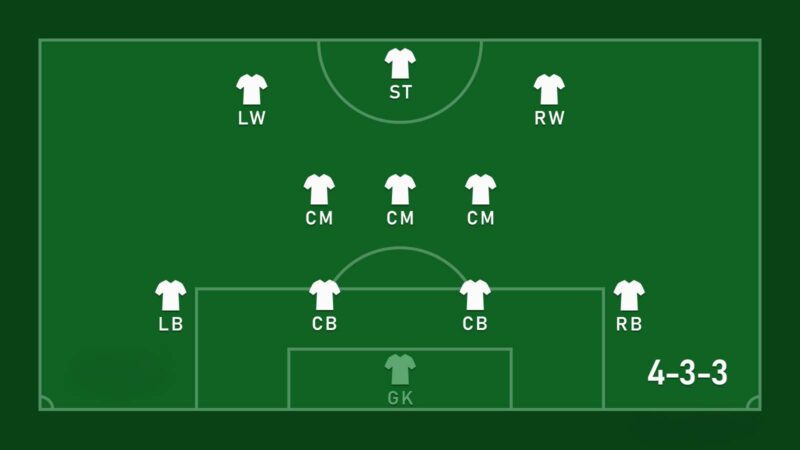
When you see a formation like this, you might think it looks like gibberish, but it’s quite simple.
Each team has 11 players on the field at any given time. One of them is always reserved as the goalkeeper. Unlike the outfield players, they can hold the ball with their hands only in the “big box” that you see at the bottom of this formation. Then there are four defenders at the back (from a top-down view, it might look like they’re at the bottom, but we say “at the back” because on the field, the defenders will mostly be behind most of the team).
Then there are three midfielders centrally, and finally three more attackers up top. This is the most basic formation you’ll see in modern football. Formations are always numbered starting from the defenders moving up the field. Many teams have different formations depending on how they want to play their style of football.
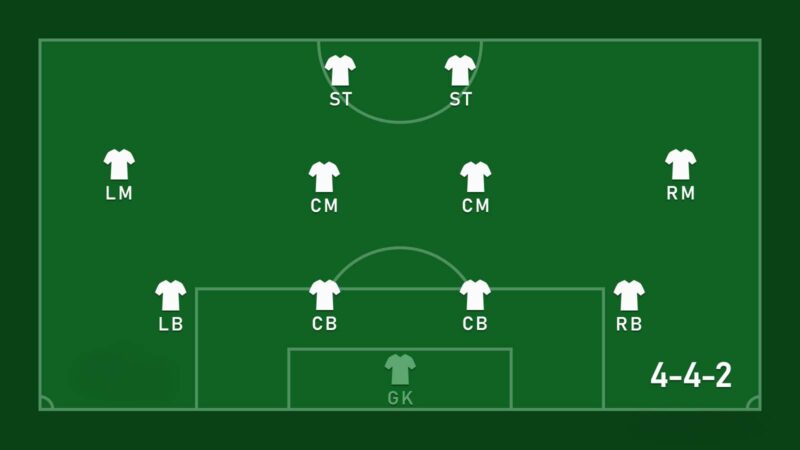
Other common formations include the 4-4-2,
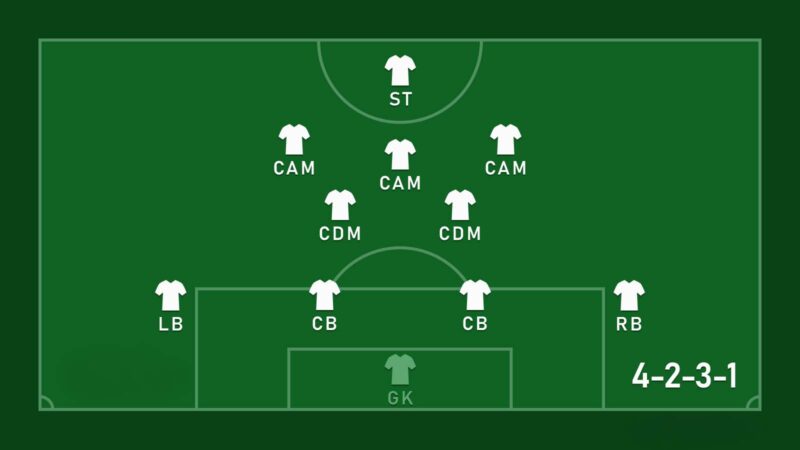
4-2-3-1,
3-5-2,
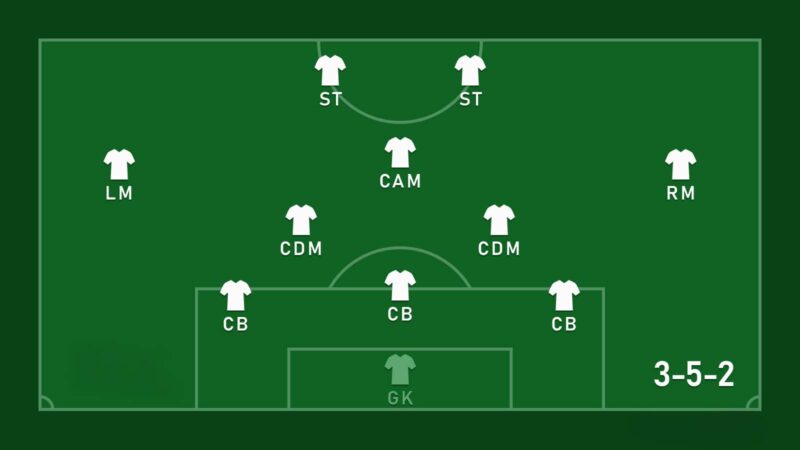
and the 3-4-3.
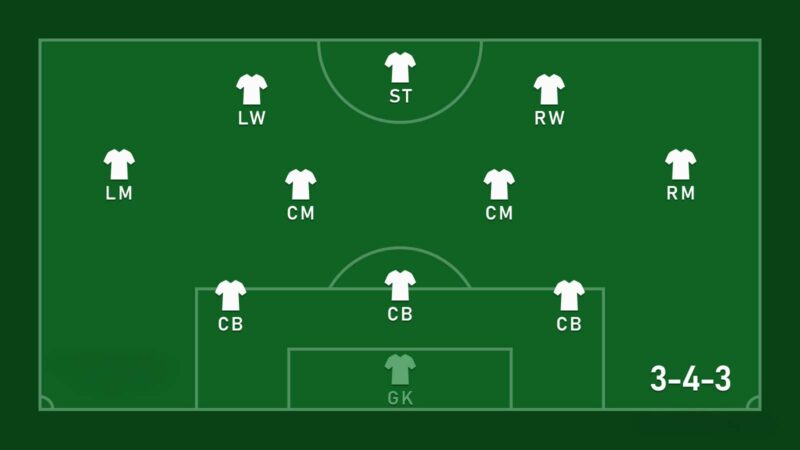
There are hundreds of others, but they are too in-depth and complicated to throw at someone just starting their football journey.
“A formation can roughly show how a team is going to play, but it doesn’t tell you their playing style or the roles for each player.” says Merriman. “It’s a good starting point for beginners to know. When people look at formations they think it shows the whole picture. It doesn’t. A formation is just the starting idea. What really matters is the distances between players and how connected the team is when the ball moves.”
Defense
The main job of the defence is simple: stop the opposition attackers from scoring. They will sometimes have other roles like being used in build-up, but their main priority is to regain the ball from the opponent to prevent them from scoring and redistribute it to either the midfielders with a simple pass or kick it far to the attackers.
Midfield
The midfield is a crucial part of the team. They are the direct link from the defence to the attack. There are a lot of roles in the midfield, but their primary job is to take the ball from the defensive line, bring the ball up the field a little bit, then hand it off in a good position to an attacking player.
Attackers/Forwards
This is the main part of football that everyone sees. These are the goal scorers in all their glory. Their main job is to put the ball in the back of the net or at least help another attacker put the ball in the back of the net. There are many different types of forwards, but the main thing to know about them is that they have to score the flashy goals that win games.
Player Roles
It’s a common mistake to think every player in a position does the same job. There are many different types of roles in each position, each with a different job to do. Let’s go over some of them.
Goalkeepers
There are primarily only two different types of forwards that you should know of. They are:
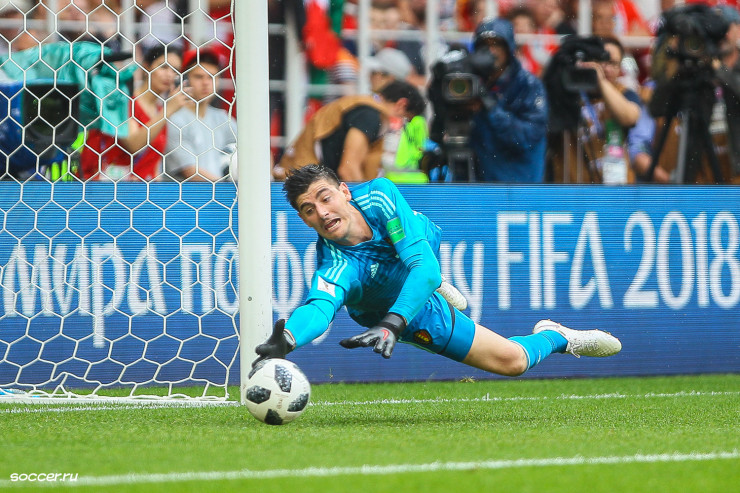
- Sweeper-Keeper: A goalkeeper who acts as an extra defender, rushing off the line to intercept through balls and playing with their feet to initiate attacks. Example: David Raya (Arsenal) or Thibaut Courtois (Real Madrid)
- Shot-Stopper/Traditional Goalkeeper: Primarily focused on shot-stopping, positioning, and commanding the penalty area. Example: Gianluigi Donnarumma (Manchester City) or Jan Oblak (Atletico Madrid)
Defenders
There are primarily only four different types of forwards that you should know of. They are:
- Center-Back (CB): The primary defenders responsible for stopping opposing forwards, blocking shots, and organizing the backline. Example: Gabriel Magalhães (Arsenal) or Éder Militão (Real Madrid)
- Sweeper/Libero: A central defender who plays behind the main defensive line to sweep up loose balls. Example: Alessandro Bastoni (Inter Milan) or Marc Guéhi (Manchester City)
- Full-Back (RB/LB): Positioned on the left or right side of the defence, they defend against wingers and support in attacking build-up by running into the midfield to help out. Example: Kyle Walker (Burnley) or Pervis Estupiñán (AC Milan)
- Wing-Back (RWB/LWB): A more offensive version of a full-back, tasked with high-intensity running to cover the entire flank, contributing heavily to both defence and attack. Example: Trent Alexander-Arnold (Real Madrid) or Alejandro Balde (Barcelona)

Midfielders
There are primarily only five different types of forwards that you should know of. They are:
- Defensive Midfielder (CDM): Positioned just in front of the center-backs to break up play, intercept passes, and shield the defence. Example: Manuel Ugarte (Manchester United) or Amadou Onana (Aston Villa)
- Central Midfielder (CM): The “engine room” player who controls the tempo, connects defence to attack, and possesses high stamina. Example: Eduardo Camavinga (Real Madrid) or Pedri (Barcelona)
- Box-to-Box Midfielder: A central midfielder with a high work rate, disrupting play in their own box by winning the ball back from the opponent much more often and attacking in the opponent’s box. Example: Jamal Musiala (Bayern Munich) or Fermín López (Barcelona)
- Attacking Midfielder (CAM): Plays behind the forwards, responsible for creating scoring opportunities through incisive passing and shooting. Example: Martin Ødegaard (Arsenal) or Jude Bellingham (Real Madrid)
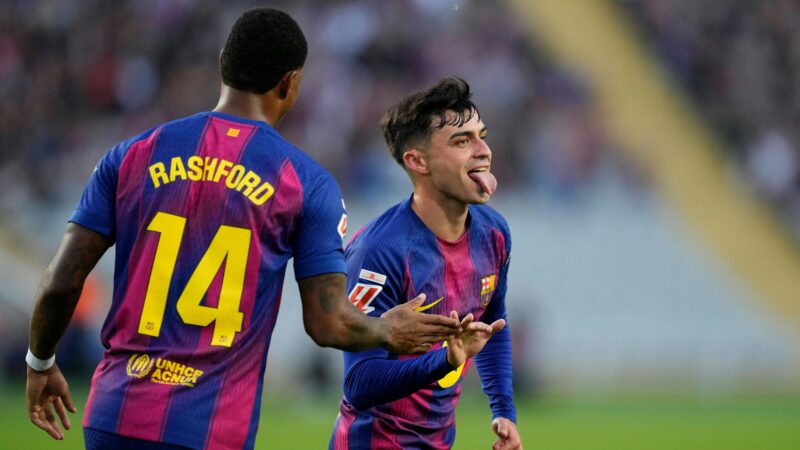
- Wide Midfielder/Winger (RM/LM): Operates on the flanks, aiming to cross the ball into the box or cut inside to shoot. Example: Leroy Sané (Galatasaray) or Marcus Rashford (Barcelona)
Forwards
There are primarily only four different types of forwards that you should know of. They are:
- Striker (ST): The primary goalscorer operating closest to the opponent’s goal, requiring speed, finishing, and intelligent movement. Example: Harry Kane (Bayern Munich) or Erling Haaland (Manchester City)
- Center-Forward (CF): Similar to a striker but may play with back-to-goal or deeper to link play. Example: Kylian Mbappé (Real Madrid) or Lautaro Martínez (Inter Milan)
- Second Striker/Support Striker (SS): Operates behind the main striker, creating space and acting as a playmaker in the final third. Example: Bryan Mbeumo (Manchester United) or Florian Wirtz (Liverpool)
- Winger (RW/LW): Attacking players positioned wide, relying on pace and dribbling to beat defenders and create chances from the wings. Example: Bukayo Saka (Arsenal) or Ousmane Dembélé (Paris Saint-Germain)

Again, there are many other roles, such as the Raumdeuter or Poacher, but they are too in-depth to cover here.
“At higher levels, players are not just positions anymore.” says Merriman. “They are functions. One midfielder might be there to control tempo, another to win second balls, another to arrive in the box late. If you only look at where they stand, you miss what they are actually doing.”
Tactics/Football Style
Tactics are the main part of how the coach connects with his team. It’s how they tell their players how to play the game. Formations and tactics go hand in hand with each other, but with formations already explained, the focus now turns to how teams express their style, or “brand,” of football. Understanding tactics lets you see why one team dominates possession while another sits back and wins with one fast break.
Key Attacking Tactics
Attacking tactics are when the primary team has possession of the ball. There are primarily only five different types of attacking tactics that you should know of. They are:
- Positional Play: Focuses on occupying specific spaces on the field to create numerical advantages and passing lanes, often used to break down compact defences.
- Counter-attacking: Relies on speed, capitalizing on the opponent’s disorganization immediately after stealing the ball.
- Tiki-Taka: Characterized by short, intricate passing and fluid movement to maintain high possession and tire opponents.
- Wide Play/Overlapping Runs: Utilizing wingers and overlapping fullbacks to stretch the opposing defence horizontally.
- Route One: A direct, long-ball approach aiming to bypass the midfield and reach strikers quickly.
Key Defensive Tactics
Defending tactics are when the primary team doesn’t have possession of the ball. There are primarily only five different types of defending tactics that you should know of. They are:
- High Pressing/Gegenpressing: Aggressive, immediate pressure applied high up the pitch to win the ball back instantly.
- Low Block (“Park the Bus”): Defending with all players near their own penalty area, minimizing space for attackers.
- Zone Defence: Players are responsible for specific areas rather than individual opponents, focusing on compactness.
- Man-to-Man Marking: Each defender tracks a specific opposing player throughout the game.
- Hybrid Pressing: A system that starts with a controlled approach but transitions into aggressive man-marking, often used to counter build-up play.
“Tactics are not about being fancy.” says Merriman. “They are about solving problems. If the opponent is strong in the middle, you go wide. If they press high, you play through or over them. Football is constant problem-solving. That’s the beauty in it. It’s a constant battle of which coach has a better mind.”
Football might look chaotic at first glance, but once you understand formations, roles, and tactics, the game slows down. You stop just watching the ball and start seeing the patterns, the space, and the decisions that shape every match. That’s when football goes from entertaining to fascinating.