
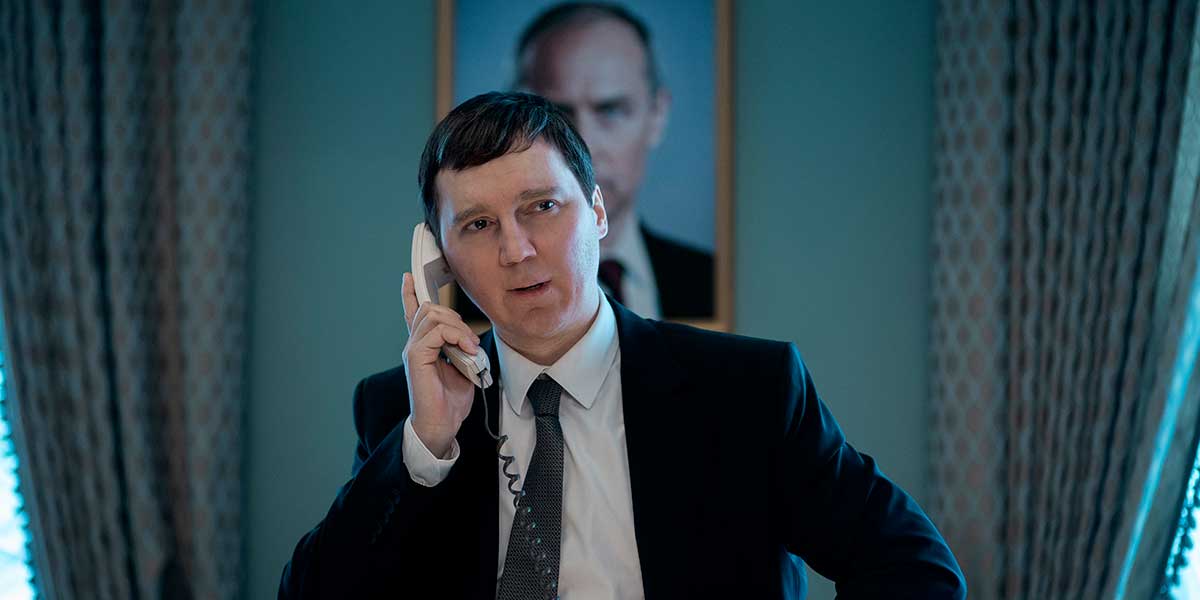
By Anastasiia Soloveva
The political thriller The Wizard of the Kremlin (2025) dives deep into how power is imposed, making ordinary people suffer. Directed by Olivier Assayas, the film is based on the bestselling novel by Giuliano da Empoli. It first premiered at the Venice Film Festival in 2025, but became available to stream for general audiences only in February of 2026. The main character of the film is inspired by the real person Vladislav Surkov, a Russian strategist and an assistant to Russia’s President Vladimir Putin in 2012.
The drama dives into Post-Soviet Russia and the rise of Vladimir Putin. It shows how well-integrated propaganda makes people and the whole country fall into wrong and even damaging worldviews. The new era, after the USSR’s collapse, brings complexities and chaos that people have to deal with. One of them is Vadim Baranov, a reality TV producer who’s trying to make his way into politics and the major league.
The structure of the plot is a big part of the drama. It’s more like a confession by Baranov, told years later after he had withdrawn from public life. It easily catches the viewer’s eye, making the story more exciting. He’s not only telling the story but also reflecting on and analyzing what was happening during that time. Through flashbacks, the film shows how propaganda replaces ideology, how truth is reshaped into narrative. The film is slow-paced and features long dialogue, likely making it boring for some viewers. But for those looking for thought-provoking historical drama, The Wizard of Kremlin is just the right choice.
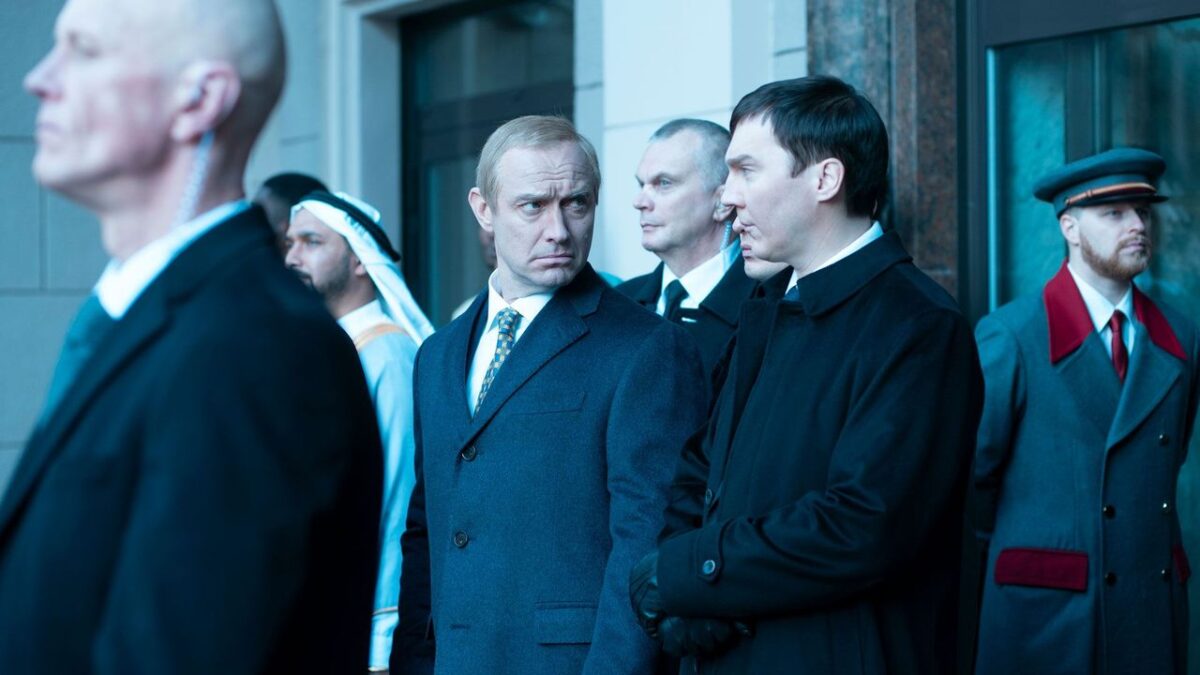
Many could think the film by the French director focuses on the rise and the history of Vladimir Putin, portrayed by Jude Law. While he did a great job playing a calm but menacing leader, the main idea of the film isn’t actually about Putin. Here, Russia’s president only plays the supporting role, making Vadim Baranov the primary focus of the story.
When the film is only gathering pace, it’s clear what Vadim’s intentions are. He’s trying to reach his goal manually, taking into account how it’ll affect people around him. It all changes when he learns to treat human suffering as a political tool rather than a moral problem. Paul Dano’s performance accurately conveys Baranov’s attitude and demeanor. He’s calm and collected, still rational and empathetic. But it quickly changes in the scene where Baranov argues with other officials about facts and the responsibility they could face after showing graphic scenes on television. Baranov says that all people need is fear with direction. He proposes framing the violence happening in the country not as chaos or failure of political structures, but as proof that Russia needs a single and strong protector, in the form of Putin. Vadim helps craft media messaging that exaggerates threats and simplifies reality into a single story. The switch from an average Russian producer to a corrupt politician is important, and the way Dano has portrayed that really helps the film to unfold.
The Wizard of the Kremlin is less about Putin himself than about how modern authoritarian power is constructed: through fear, storytelling and illusion. Through Baranov, the director is trying to showcase the overall devastation and chaos that the state of Russia was in the 90s. The film is worth watching if you want to gain some insight into how Putin came to power, and how that power has been maintained.
