
By Daniella Daniel-Kalio
Scrolling through social media today means constantly asking yourself if someone’s pictures or videos of themselves are real or filtered. Perfect skin, flawless makeup and carefully curated outfits are what we see on posts from influencers and even everyday users. But behind these posts are a range of editing filters that reshape faces, bodies and even wardrobes. As these technologies become more advanced and popular, they transform beauty and fashion and even how people view themselves in comparison to others.
In recent years, AI-powered editing apps like Remini, Facetune and Style DNA have grown in popularity. Tools like these allow users to smooth skin, alter facial features, enhance lighting in their posts and even create whole new wardrobes and looks. Social media apps like Instagram and TikTok also offer built-in filters that can alter appearances.
Experts agree that these tools can contribute to unrealistic beauty standards online. Cosmetic surgeon and co-founder of the Esthetic Clinics Debrah Shome says these filters exaggerate facial features and smooth skin to unrealistic levels. According to him, this has led to an increase in patients seeking procedures to look more like these filters.
A study from the Swinburne University of Technology found that many filters promote Eurocentric facial features, selective cultural appropriation, while encouraging them to experiment with cosmetic-surgery features such as lip fillers, face slimming, etc.
For many creators, this has become part of their online creation, almost like second nature to them. However, some creators have said that they try to avoid using them as this causes unrealistic beauty standards to look perfect at all times.
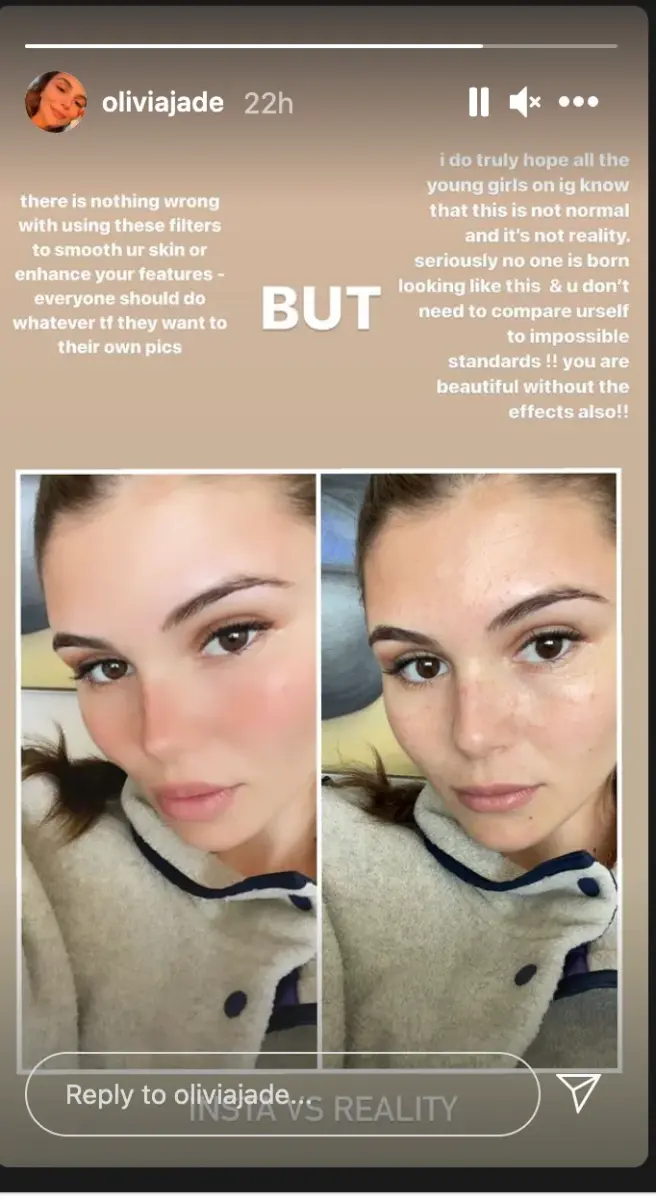
Beauty influencer Olivia Jade Giannulli has spoken up about how what we see on social media is not always reality. In a post comparing her face with filters and her face without filters, she warned her followers that the flawless images they see aren’t real. She wrote that she hopes young girls on social media know “that this is not normal and it’s not reality.”
Other influencers have also warned about the effects of these filters. Body-confidence creator Joanna Kenny criticized a popular TikTok filter called “Body glamour” saying it drastically changed her facial features. In a video she posted, she describes how a filter changed “the shape of my nose, my cheekbones, and the shape of my face”, further creating unrealistic beauty standards.
Even creators who use filters acknowledge their influence. Fashion content creator Aaliyah Opoku, in an interview said she often uses filters while filming but tries to remind her followers that social media posts are rarely natural. “I use filters but I regularly post selfies of my natural, unfiltered face on my story to remind my followers that imperfections are a normal part of being human and so that they are able to distinguish between what is real and what is filtered.”, says Aaliyah.
Experts say these conversations reflect a shift across the fashion and beauty spaces. As artificial intelligence tools become more sophisticated, they are not only editing photos but also generating outfit ideas, giving outfit recommendations, and helping influencers create an
aesthetic that they’ll be know for on social media.
As AI tools continue to evolve, creating a world where faces can be altered and outfits can be created by apps, the most important thing for both influencers and audiences now is learning to recognize the difference between online perfection and reality.