
By Erik Hinterleuthner
Journalism at Sheridan is history. After more than 50 years the two-year diploma program was cut amid the college’s downsizing efforts.
The program covered a large variety of topics, such as: writing, editing, videography, broadcasting, podcasting, data journalism as well as law and ethics.
Despite its origins as a community newspaper-focused program, the program shifted to multimedia journalism. Students found themselves doing everything from carrying a camera around different locations, and using the internet to find a person and get in contact with them, to interviewing sources and banging out stories. There was a very large variety of assignments.
Students dabbled in all facets of news reporting through a series of mandatory courses.
The introduction on how to use video cameras was very thorough and did an excellent job at teaching future news industry pros the very basics. However, the often challenging task of tracking down real-world sources was onerous. More focus and training on that would have been helpful. Admittedly, it’s tricky to teach how to find people online and get in contact with them for an interview, but the system in place didn’t seem like the best way to go about it.
Students also worked on assignments with the camera equipment. This involved booking, signing out and returning the limited number of tripods, cameras, and microphones in the program inventory.
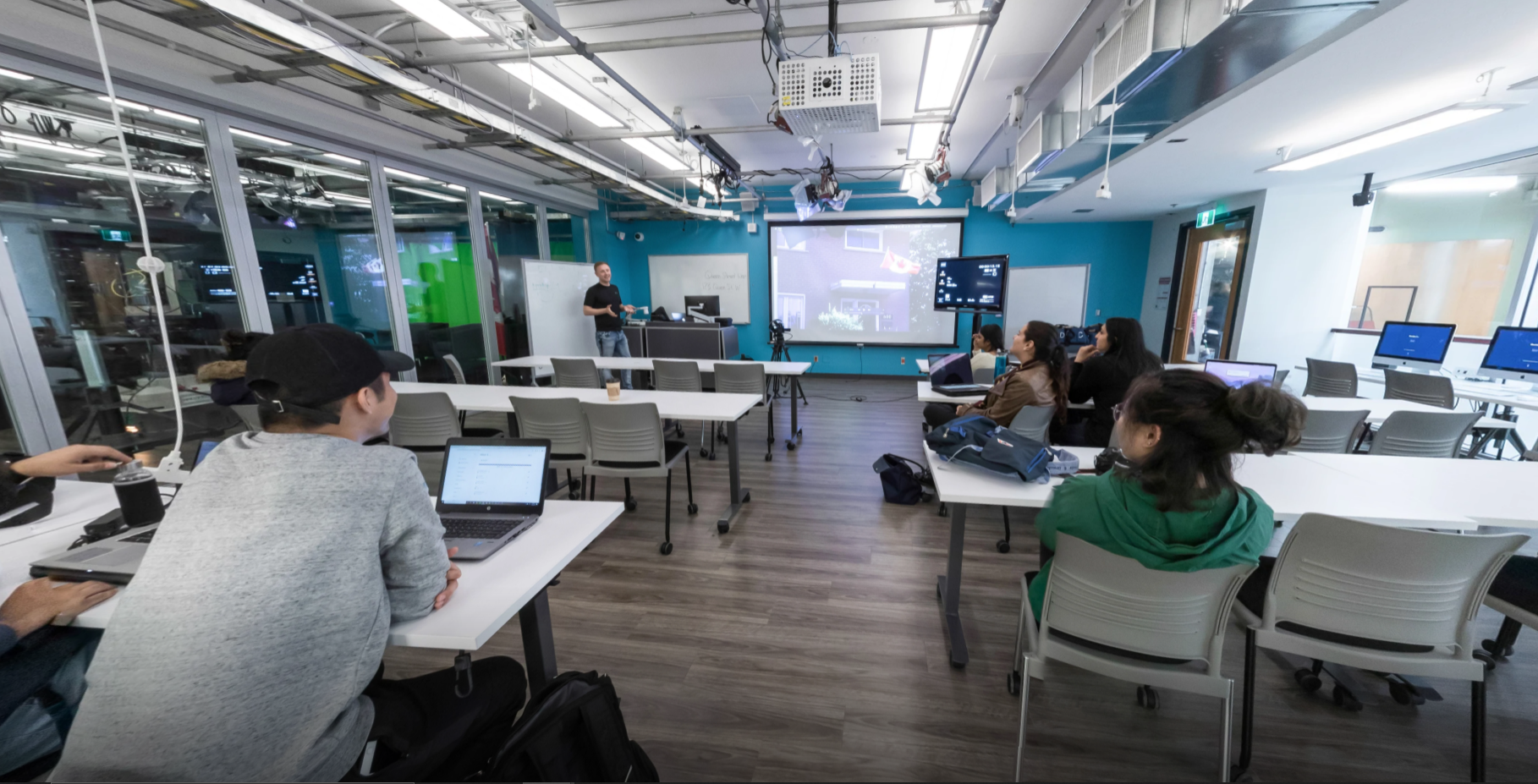
One of the bright spots was Sheridan journalism’s full-on TV newsroom, just like in the real industry. Course work allowed students to play the role of anchor, camera operator or control room techie. These courses taught you the basics very well and also gave you a lot of experience of the field.
Along the way, students created multiple TV news-style reporter packages where journalists-in-training were required to contact people on a given topic and then interview sources on location.
There was also a course where students worked with software like Adobe InDesign and Adobe Photoshop, which was helpful for those more inclined to graphic design.
The overall workload in the program was fair, though it could get quite hectic at times with lots of major assignments due towards the end of the term. Although that is fairly common with any program in any school.
Semester 2 and 3 were especially challenging with lots going on. Conversely, semesters 1 and 4 seemed lighter.
In terms of direct information about the journalism industry, there were a lot of professors that worked in the industry or were simultaneously employed in the news media, so they had a good chunk of knowledge to share.
At the end of the program, the field practicum involved students finding an internship themselves in the industry. This was done through regular job applications.
With Sheridan journalism about to wrap (quite possibly for good) one wonders if this program may return in the future in some form. If it does, now you understand a bit more about it, and if it doesn’t come back, then you know a bit of what it was like.
